
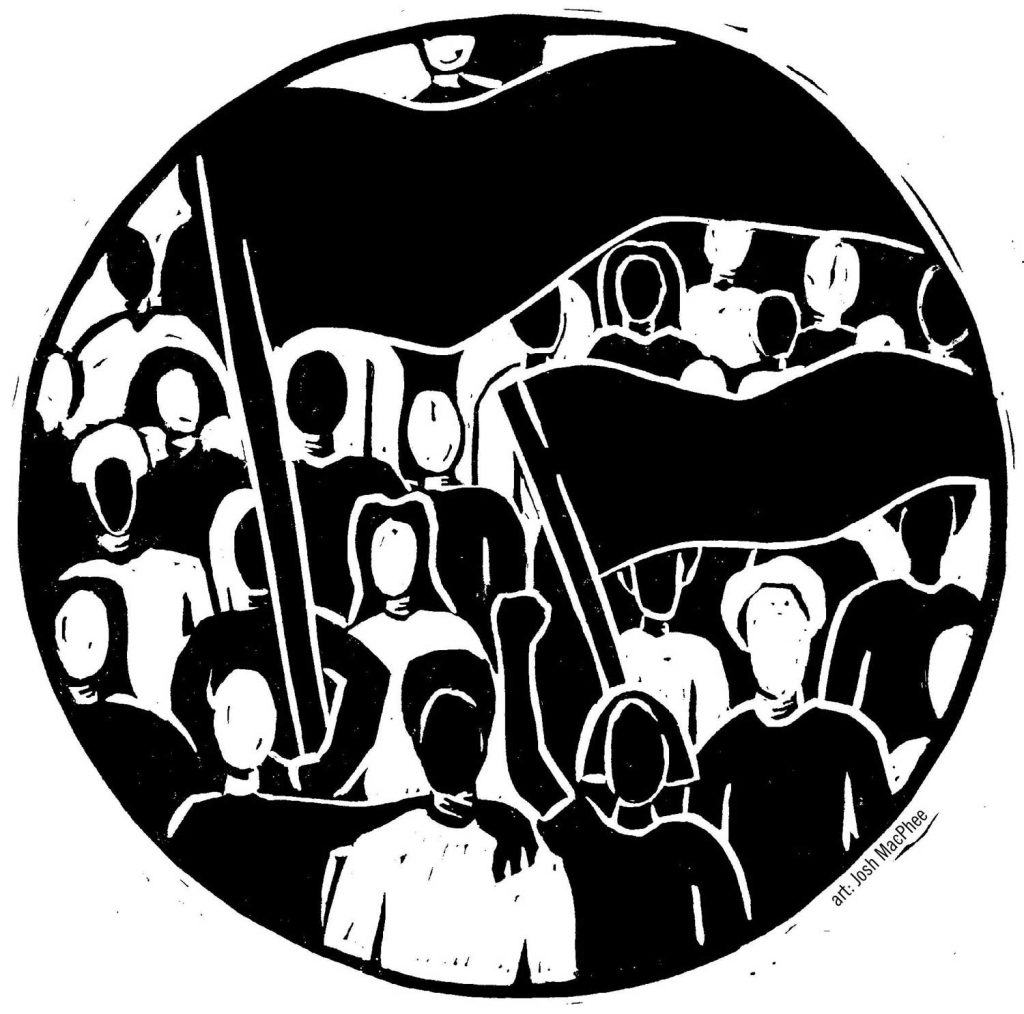
Those who make history don’t ask for permission!
In Brazil, they never have—even if the official narrative denies and omits it. Those who make history act when the order dictates waiting, speak when power demands silence, and move when they say it’s not the time. Telling history comes later; making history is interrupting the normal course of inequality. It’s combat.
That’s how it was in Palmares, when enslaved people refused the imposed condition and built another way of existing, outside the colonial logic, even if the official narrative denies and omits the political character of this choice. They weren’t writing chapters—they were living the rupture. That’s how it was in Canudos, when poor and abandoned people decided they would no longer accept a Republic that only existed for a few. The State responded with massacre and then tried to reduce everything to “deviation” or “fanaticism,” even if the official narrative denies and omits the deliberate violence of power.
That’s also how it was in the General Strike of 1917, when workers paralyzed São Paulo and other cities, confronting bosses, police, and the Army. They didn’t ask for gradual reforms: they demanded dignity, shorter working hours, an end to exploitation. The country came to a standstill because the grassroots decided to act, even if the official narrative denies and omits that labor rights were born from strikes, confrontation, and popular organization—not from the goodwill of the State.
Making history in Brazil has always meant for the oppressed and exploited people confronting armed power, large landowners, the elite, and their rhetoric of order. The ABC strikes didn’t ask permission from the bosses or the regime; they stopped factories and forced the country to listen, even if the official narrative denies and omits the strength of collective action. The Diretas Já movement was born in the streets, not in offices. The student occupations, the June uprisings, the indigenous and quilombola resistance follow the same logic: direct action against a system that insists on denying a future.
Those who tell the story usually arrive later to soften it. They say it was “excess,” “confusion,” “radicalism.” It erases names, bodies, and conflicts, even if the official narrative denies and omits that every conquest was born from confrontation. It transforms revolt into domesticated memory.
The history of Brazil does not advance through concession. It advances through refusal—even if the official narrative denies and omits it. For those who occupy, paralyze, confront, and disobey, it is the protagonism of the oppressed and exploited people who become a source, no longer anonymous discarded pieces!
To narrate is to record what has passed. To make history is to attack the unjust normality and open space, by force if necessary, for that which power insists on preventing.
In the struggle, we are dignified and free people!
Akracia – Fenikso Nigra


